

Landing and Settling in Alberta
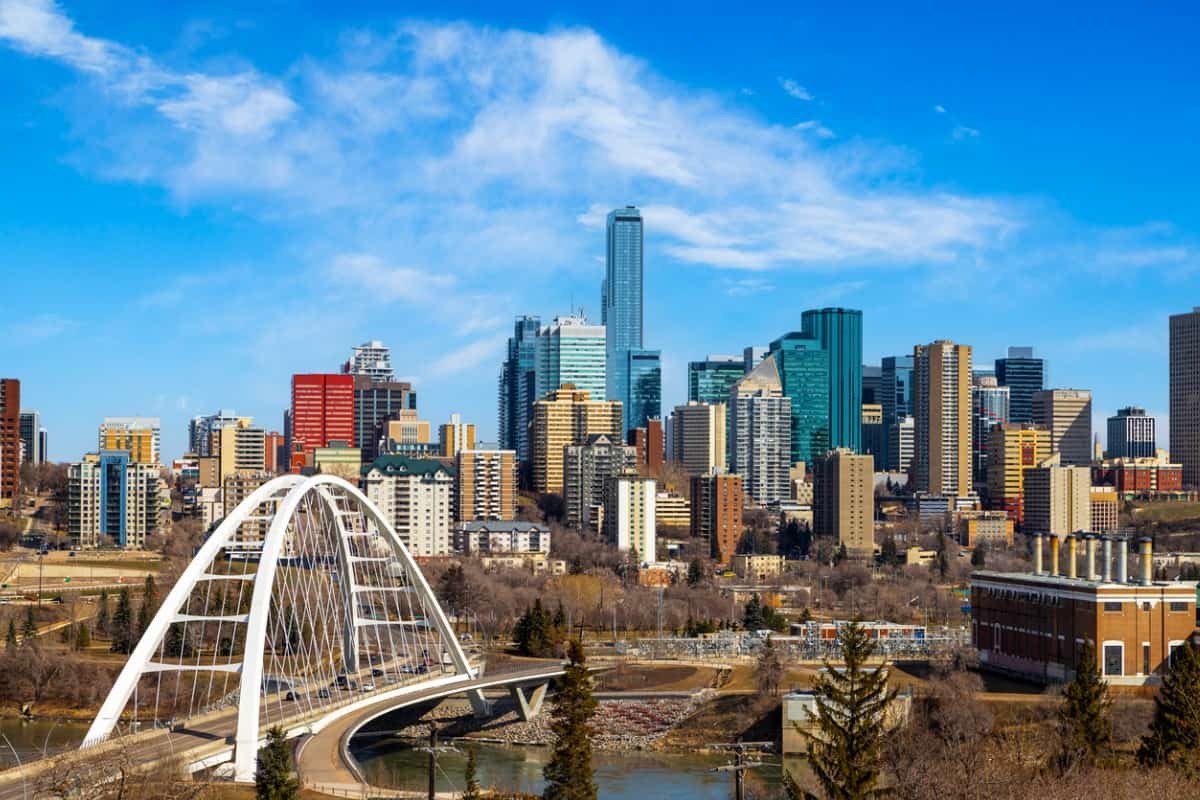
This guide is for newcomers to Canada who are thinking about Alberta as a possible destination.
Use this page to learn about everything from housing and commuting to healthcare, education, taxation, and fun/leisure in Canada’s fourth largest province (by area), home to over 4.6 million Canadians.
Table of Contents
- Overview
- What are the benefits of living in Alberta?
- Housing in Alberta
- Commuting in Alberta
- Employment in Alberta
- Healthcare in Alberta
- Education in Alberta
- Weather in Alberta
- Emergency Services in Alberta
- Newcomer Services in Alberta
- Taxation in Alberta
- Things to Do in Alberta
- Contact CanadaVisa and Cohen Immigration Law for Assistance
Overview
This guide will first help readers learn about some of the unique benefits that come with choosing Alberta as their destination province. These include higher income levels than the rest of Canada as well as an abundance of outdoor activities/natural beauty to explore and a large population of newcomers that could simplify your transition to life in Canada.
From there, explore different key areas of settlement in Alberta. These topic areas include housing, commuting, employment, healthcare, education, weather, emergency and newcomer services, taxation and fun and leisure, all as you prepare to decide where in Canada you would like to settle (or to learn more about your chosen settlement destination) as a newcomer to this country.
What are the benefits of living in Alberta?
As a newcomer to Canada, Alberta provides a key benefit that all Canadians strive for – high levels of income. Additionally, the province’s large existing newcomer population is another notable draw of life in Alberta, which is also true of Alberta’s prominent outdoor activity lifestyle and natural beauty.
According to the Government of Alberta, this province offers its residents the highest median after-tax income in all of Canada. In other words, “families in Alberta typically enjoy a higher family income than other parts of Canada.” For obvious reasons, this is one of the key benefits that comes with settling in Alberta, as a higher take-home income allows for more financial freedom and flexibility, something that all Canadians strive to achieve.
Alberta is home to a significant newcomer population, with some 1 million immigrants around the province. Because newcomers tend to settle in places where they can be near people with similar backgrounds and experiences, Alberta is a top immigrant destination because the presence of other newcomers can make it much easier for the newest Canadians to acclimate to their surroundings.
Finally, one of Alberta’s most unique benefits is the prevalent “outdoorsy” lifestyle that exists throughout the province. Home to the world-renowned scenery of Banff and other places such as Johnston Canyon, this province lays claim to some of Canada’s best outdoor activities and beauty through its natural scenery.
Housing in Alberta
More than 4.6 million Canadians live in Alberta. This makes Alberta Canada’s fourth most populated province, behind Ontario, Quebec and British Columbia.
Most newcomers to Canada focus on the rental market when they look for housing upon arrival.
Note: The types of properties available for rent throughout the province can vary significantly based on your chosen settlement location
Rentals.ca produces a monthly National Rent Report that provides an updated list of average rental costs for one and two-bedroom units in different cities across Canada.
In Alberta, most newcomers to this province settle in a province’s largest Census Metropolitan Areas (CMAs), which include the following communities (by largest population) in this province:
- Calgary (over 1.6 million)
- Edmonton (over 1.5 million)
- Lethbridge (over 130,000)
Resources to help you find housing in Alberta
Government of Alberta’s Digital Service: https://findhousing.alberta.ca/
Government of Alberta Affordable Housing Resources: https://www.alberta.ca/affordable-housing-programs.aspx
Commuting in Alberta
For information on your initial arrival into this province, including the names and locations of Alberta’s several international airports, please visit Arriving in Canada.
At least 71% of residents in each of Alberta’s three largest CMAs live less than 500 metres from a “public transit access point.” This means that most residents of these communities can easily access a bus in their community. The Government of Alberta also notes that Calgary and Edmonton have dedicated train transit systems to service their communities. However, most residents of Alberta’s three biggest CMAs continue to use a car, van, or truck as their main mode of commuting.
Still, in Calgary, over 40,600 people use some form of public transportation to move around the community. Throughout the Edmonton CMA, that number is over 33,000. Lastly, in Lethbridge, slightly less than 1,000 residents use public transportation.
To meet the public transportation needs of its community, the Edmonton Transit Service operates a fleet of buses, trains and other vehicles. The same is true in Calgary, although public transit in Alberta’s most populated city is handled by its own authority, Calgary Transit. The CMA of Lethbridge also has its own dedicated Lethbridge Transit public transportation system.
Getting an Alberta Driver’s License
Newcomers to Alberta who would like to operate a motor vehicle must meet the following requirements:
- You must be 14 years of age (for a learner’s license, more on that below)
- You must have a valid government-issued license, valid insurance coverage and be in possession of your original ownership permit when driving your vehicle
For your first 90 days as a resident of Alberta, you may operate a motor vehicle using your driver’s license obtained in your home country. At the end of that period, Canadian newcomers living in Alberta must apply for and receive an Alberta driver’s license to continue operating a vehicle. To do this, you must either obtain a driver’s license outright or apply and be approved for a Driver’s License Exchange in this province.
This link will be able to give you more information about completing a successful driver’s license exchange in Alberta. It is important to also remember that not all newcomers to Alberta will be eligible for an exchange. Instead, the provincial government decides who is eligible for this process based on which countries have a reciprocal licensing agreement with Alberta. Please visit the government’s website for more information.
Note: It is highly recommended that you also carry an International Driving Permit (IDP) during this time
Here is some general information about the process of obtaining a driver’s license in Alberta if you cannot complete an exchange.
- Alberta’s licensing system involves three stages, all of which require prospective drivers to meet a different age requirement
- Stage one, which allows Alberta residents to obtain a Learner’s license (Class 7), requires that drivers: be 14 years of age or older, have parental or guardian consent (if they are under 18 years of age) and pass two tests (knowledge and vision)
- Stage two, where drivers who are at least 16 years of age can get a probationary Class 5 GDL license, mandates that drivers must have parental or guardian consent (if under 18 years of age), must have had a Class 7 learner’s license for at least 12 months and they must pass the basic road test
- In stage three, drivers who are at least 18 years old can become fully licensed (with a full Class 5 license) if they have completed the 24 months of probationary driving and have been suspension and demerit-free for the last 12 months
Note: Drivers may be eligible to receive a maximum six-month reduction on their 24-month probationary period if they complete a Class 5 or Class 6 driver training program from a driver training school licensed by Transportation and Economic Corridors
To learn more about driving in Canada, including the importance of insurance as well as the different requirements and options for purchasing and/or renting a car, please visit our dedicated page on Driving in Canada as a Newcomer.
Employment in Alberta
In Alberta, the three largest industries in order of employment are as follows:
- Trade occupations
- Healthcare and social assistance
- Construction
The Jobs and Employment section of the Government of Alberta’s website will provide more details on employment throughout the province.
Here are some further details about Alberta’s three biggest employment sectors.
Alberta employs more than 345,000 people in the Trade industry, which includes those in wholesale and retail trade professions. This means that a significant number of Alberta’s residents work in jobs that require them to buy items in bulk for the purpose of reselling these items to other businesses. This is the core responsibility of wholesale traders. Meanwhile, retail trade employees perform many of the same tasks, but they are only involved at the direct-to-consumer level of the sales cycle. In either part of the employment sector, you can find people employed in these jobs with any consumer item, including groceries, electronics and household goods.
More than 232,000 Alberta residents work in occupations throughout the healthcare and social assistance employment industry. These workers, generally referred to as healthcare workers, are the individuals who are responsible for taking care of physical, mental and social health in their local communities. Job titles in this employment sector may include therapist, child and youth care worker or nurse.
Over 178,000 people who call Alberta home are employed in the province's construction sector. The construction industry is a crucial one across Canada, as these workers are the ones who work to build the infrastructure that everyday Canadians rely on, including schools and other important buildings. Perhaps most importantly, workers in the construction industry play a key role in developing housing, especially for newcomers to Canada more generally, Alberta specifically, and everywhere in between.
Resources to help you find a job in Alberta
ALIS, in collaboration with the Government of Alberta: https://alis.alberta.ca/look-for-work/
Alberta Association of Immigrant Serving Agencies (AAISA): https://aaisa.ca/membership-directory/
Alberta Supports: https://www.alberta.ca/alberta-supports.aspx
Healthcare in Alberta
Alberta imposes a waiting period of 3 months on newcomers to the province who wish to become eligible for public healthcare coverage. At that time, any newcomer to Canada that has settled in Alberta can obtain free healthcare if they have a valid provincial health card.
Note: The application process for a provincial health card in Alberta involves four steps, which are generally summarized below. For more detail, please visit this link from the Government of Alberta.
- Step one: Review eligibility criteria
- Step two: Complete the application form
- Step three: Gather supporting documents
All Alberta health card applicants will need to provide the government with supporting documents to verify their Alberta residency, their personal identity and their legal entitlement to be in and remain in Canada. Details on acceptable documents that will satisfy each of the above requirements can be found at this Government of Alberta page.
- Step four: Submit the application
Across Canada, a valid health card allows Canadians to access public health services without having to pay for them out of pocket. However, each province in Canada has their own provincial healthcare coverage system, where the provincial government decides exactly what services to offer as part of the public healthcare coverage offered to its residents.
Note: Certain medications (ex. prescription drugs) and treatments will require the recipient to pay out of pocket
In Alberta, residents are offered public healthcare coverage through the Alberta Health Care Insurance Plan (AHCIP). This plan covers the following:
- Medically required services provided by a physician
- Psychiatrist visits
- Medically required diagnostic services including laboratory, radiological and other diagnostic procedures
- Oral and maxillofacial surgery services
- Bariatric surgery for Albertans who are eligible under the Weight Wise program
- Breast augmentation and mastectomy for transgender surgery
- Medically necessary nursing services, laboratory, x-ray and diagnostic procedures
- Accommodations at a standard level and meals
- Medications administered in a hospital
- Use of the operating room, care room, radiotherapy, physiotherapy and anesthetic facilities
- Routine surgical equipment and supplies
- Inter-facility transfers in Alberta by ambulance
Please refer to the following links depending on the information that you need.
- Applying for AHCIP coverage: https://www.alberta.ca/ahcip-apply.aspx
- Contacting AHCIP: https://www.alberta.ca/ahcip-contact.aspx
The Government of Canada recommends that all residents of Alberta buy private health insurance to supplement the public healthcare coverage provided by the province. To learn more about healthcare in Canada, visit Get Healthcare in Canada: A Guide for Newcomers.
Education in Alberta
Children of newcomers to Alberta enter the provincial education system from the age of six. They then continue through the mandatory portion of the Alberta education system until they graduate from high school.
K-12 Education in Alberta
From kindergarten to high school, Alberta residents can provide their children with free education through the public school system.
Note: The Government of Alberta provides this comprehensive resource for parents to better understand what their child is learning and how they can get involved with their child’s education
For parents who would not like to send their child to public school, Alberta offers private education options through private schools or boarding schools. These options will require parents to pay for tuition out of pocket.
This CanadaVisa page, A Newcomers’ Guide to Education in Canada, will give you a general look at all things Canadian education, including important information about the Canadian school grading system, the Settlement Workers in School (SWIS) program and much more.
The goals of Alberta’s education system differ depending on the level of education that your child is receiving. In other words, the province focuses on teaching students different things at the elementary school level and the high school level. For this reason, the provincial government has designed a dedicated webpage that breaks down the provincial curriculum from kindergarten to 12th grade in the province.
For more information on the general structure of the kindergarten through 12th-grade education system in the province of Alberta, please visit this link.
Post-Secondary Education in Alberta
Alberta offers over 150 Designated Learning Institutions (DLIs) for newcomers to Canada, which are scattered all over the province, from Okotoks (population of around 28,000) to Calgary (population over 1.6 million).
Many of these 150 DLIs offer Post-Graduation Work Permit (PGWP)-eligible programs, which would enable non-permanent resident Canadian newcomers who successfully graduate from an eligible program to acquire Canadian work experience. Acquiring this experience will be key to their eventual eligibility for Canadian permanent residence.
For Immigration, Refugees and Citizenship Canada’s (IRCC) full list of DLIs across Canada, click this link.
Weather in Alberta
Alberta experiences a similar pattern of seasons as the rest of the country.
For an overview of the weather across the country, including advice on how to dress appropriately for each of Canada’s four seasons, check out How to Dress for Canadian Weather.
Generally, each season in Alberta brings with it a unique set of weather conditions that require residents of the province to dress differently compared to other seasons throughout the year. However, there are often regional variances in the weather during the same season depending on where you live in the province.
Speaking about Alberta as a whole, the yearly calendar starts and ends with winter. Not unlike the rest of the country, winter in Alberta starts in the latter part of December and continues until the middle of March. Alberta’s winter season typically brings a lot of snow and frigid temperatures to the province. This is the time when people living around the province should get familiar with the best way to layer their clothing, as this is a great way to stay warm.
Following the winter season in Alberta, this province transitions into spring until the end of June. At this time, temperatures begin to rise as we approach the middle of the calendar year. Despite this, Alberta is one of Canada’s provinces that is prone to a longer experience with winter-like conditions. For that reason, dressing for the weather will likely mean continuing to use clothing that is typical for winter a little while longer than you may in other regions of Canada. Eventually, however, typically into April and onwards, Alberta’s weather will warm up as the province heads towards one of Canada’s best summer seasons.
The end of spring marks the beginning of summer in Alberta. A season that stretches from the latter part of June until the latter part of September, summertime in Alberta is naturally when the weather is at its warmest.
Note: Alberta is Canada’s sunniest province, with 312 days of sun every year. In the summer, Alberta averages temperatures between 20 and 25 degrees Celsius.
This is a great time to put away all your winter and spring clothing, instead opting for t-shirts, sandals and shorts. Focus on wearing breathable fabrics to stay dry and comfortable, as well as wearing clothes that protect you from the sun (hats etc.) and footwear (usually open-toed shoes) that best allows your feet to remain cool as well.
At the end of the summer, Alberta transitions into fall (or autumn). This season takes place between mid-September and mid-to-late December. During these months, warm temperatures say goodbye to Alberta as the province transitions back into a cycle of cold temperatures as Canada begins to work its way toward winter. At this time of year, conditions tend to be rather windy, which will require residents of this province to get back to wearing warm layered clothing and other items that best block out the wind and keep them warm.
Emergency Services in Alberta
Alberta residents can call 9-1-1 if they ever need assistance from local emergency services, including the police, an ambulance or fire services. Contact information for hospitals around Alberta can also be found at this link provided by Alberta Health Services.
Newcomer Services in Alberta
Alberta’s provincial government offers settlement services to newcomers, including resources that can be accessed through this government webpage. These settlement services cover all key areas of need for Alberta-bound immigrants, including (but not limited to) pre-arrival services, community support, childcare and language support.
IRCC also provides government-funded services to Canadian newcomers who require assistance with a wide array of tasks when they settle in Canada. The following is a non-exhaustive list of the areas where IRCC-funded service providers can assist newcomers across the country.
- Looking for a job
- Getting a language assessment
- Registering for language classes
- Finding a place to live
- Signing your kids up for school
- Learn about community services
Certain groups of newcomers, including women, seniors, youth and members of the 2SLGBTQi+ community can also receive specialized service and assistance through IRCC-funded organizations. A full list of Canada-wide settlement services for Canadian immigrants is available here.
Note: The list at the above link can be filtered by province and type of service required
Taxation in Alberta
Two of the primary types of tax in Alberta are sales and income tax.
In Alberta, residents are only charged a 5% GST sales tax, while most other provinces in Canada either charge GST and another tax (PST or QST) or a Harmonized Sales Tax (HST) that typically exceeds 10%.
Similar to the way income taxes operate in other parts of the country, Alberta charges income tax based on a bracketed system that requires residents to pay a varying amount of money back to the government based on their annual personal income level. This Government of Alberta webpage provides a more in-depth overview of taxes in the province.
Would you like more information on how to file a personal tax return once you immigrate to Canada? Visit our dedicated page on Filing your Personal Income Tax Return in Canada.
Things To Do in Alberta
When newcomers arrive in Canada, they do not expect to simply always put their heads down and work. Instead, Canadian immigrants have an expectation and a desire to become part of Canadian society, which includes finding fun things to do around their communities for them and their families.
Alberta has no shortage of memorably quintessential Canadian experiences for newcomers. The annual Calgary Stampede, as an example, is one of the most renowned celebrations of old Western culture anywhere in the world. 10 days of horses, agriculture, and a one-of-a-kind rodeo experience is just one of many fun things to do around Alberta as a newcomer to this country.
On a more regular basis, towns and cities across the province of Alberta celebrate the province’s rich multiculturalism through events such as Heritage Day. Heritage Day occurs on the first Monday in August of every year.
This link from the Government of Alberta contains a full list of all the “special days” and heritage month celebrations that occur throughout the province annually.
Contact CanadaVisa and Cohen Immigration Law for Assistance
Do you require Canadian immigration assistance?
Cohen Immigration Law is a leading Canadian immigration law firm with over 45 years of experience. Cohen Immigration Law is comprised of over 60 Canadian immigration lawyers, paralegals, and other professionals. We are dedicated to helping people achieve their Canadian immigration goals. We assist in areas including skilled worker and business immigration, family sponsorship, work permits, study permits, citizenship, and inadmissibility. CanadaVisa.com was founded in 1994 as the online presence of Cohen Immigration Law. CanadaVisa has since blossomed into the one of the world's most trusted resources on Canadian immigration. Please reach out for assistance. We're happy to help:
Skilled Worker Assistance
Find out if you are eligible to immigrate to Canada through one of the country's over 100 skilled worker options.
Family Sponsorship Assistance
See if you are eligible to sponsor a loved one, or be sponsored by a Canadian citizen or permanent resident.
Other Immigration Enquiries
Contact us about work permits, study permits, business immigration, citizenship, and inadmissibility.

