

Rural Community Immigration Program (RCIP)
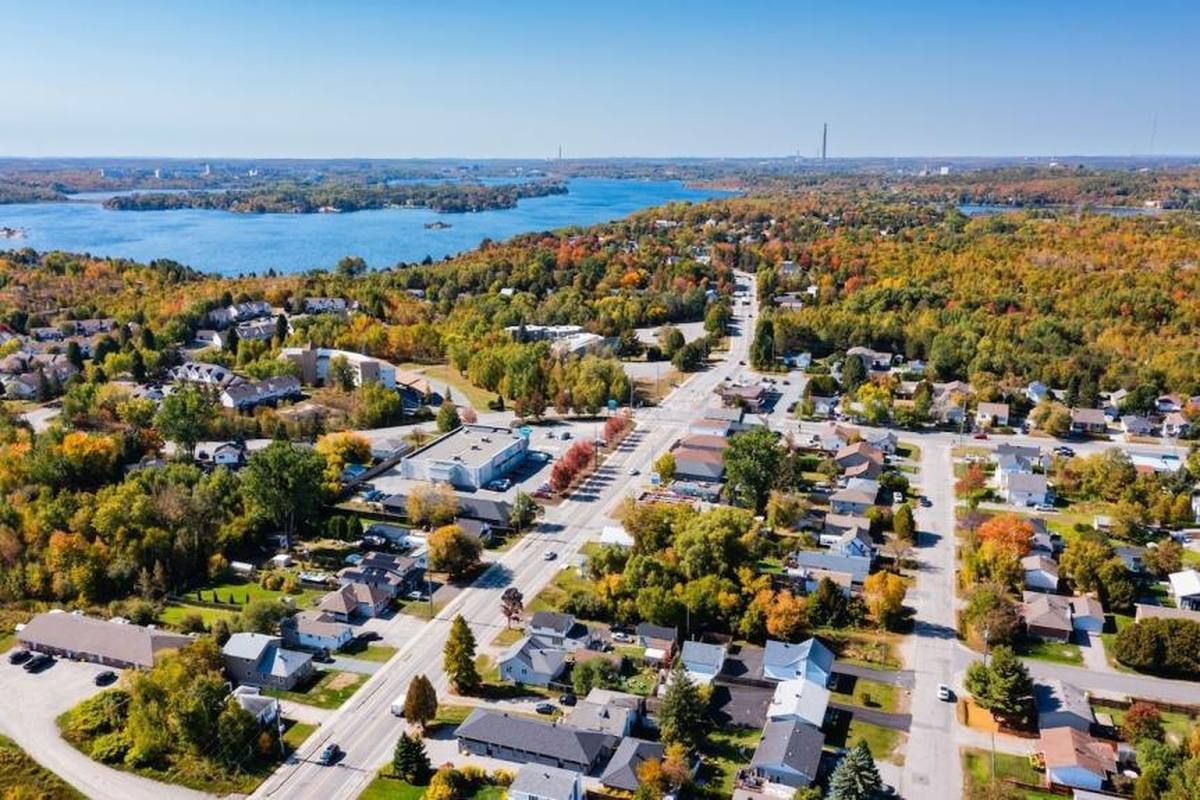
The Rural Community Immigration Program is an employer-driven pathway to permanent residence (PR) for foreign workers and international graduates looking to settle in one of 14 participating communities in rural Canada.
First introduced as a pilot (Rural Community Immigration Pilot) in 2025, the program will transition to permanent program status effective January 1, 2027, bringing the existing pilot to a close.
Complete our FREE assessment to find out if you are eligible for Canadian immigration!
Table of Contents
- Overview
- Participating communities
- How to qualify for the Rural Community Immigration Program
- Process for obtaining PR under the Rural Community Immigration Program
- Contact Cohen Immigration Law for assistance
Overview
Introduced on Nov. 9, 2026, the Rural Community Immigration Program (RCIP) is a permanent economic pathway that grants Canadian PR to foreign nationals who have secured:
- A qualifying job offer from an employer designated by a participating community; and
- A community recommendation confirming their job offer is genuine, aligns with local labour market priorities, and meets program requirements.
The program is designed to help rural and remote communities attract skilled immigrants to work in occupations experiencing labour shortages, with each community identifying its own priority sectors and occupations.
Canada plans to admit 5,500 PRs through the RCIP in 2027, with that number projected to increase to 6,000 in 2028 and 6,500 in 2029.
Participating communities
The 14 communities participating in the Rural Community Immigration Program include:
| Community | Province |
|---|---|
| Pictou County | Nova Scotia |
| North Bay | Ontario |
| Sudbury | Ontario |
| Timmins | Ontario |
| Sault Ste. Marie | Ontario |
| Thunder Bay | Ontario |
| Steinbach | Manitoba |
| Altona/Rhineland | Manitoba |
| Brandon | Manitoba |
| Moose Jaw | Saskatchewan |
| Claresholm | Alberta |
| West Kootenay | British Columbia |
| North Okanagan-Shuswap | British Columbia |
| Peace Liard | British Columbia |
Participating communities will publish their priority sectors and occupations for 2027 on their respective websites as they become available.
Additional communities may be selected to participate in the future.
How to qualify for the Rural Community Immigration Program
Foreign nationals seeking PR through the permanent program must satisfy the following requirements:
- Obtain a valid recommendation from a participating community;
- Have a qualifying job offer from a designated employer in that community;
- Possess at least one year (1,560 hours) of qualifying work experience in the past three years;
- Meet the minimum English or French language requirements through an approved test;
- Hold a Canadian educational credential or its foreign equivalent; and
- Have sufficient settlement funds to support themselves and their accompanying family members.
Work experience requirements
For work experience to count, it must fall within a TEER category comparable to that of the job offer, as outlined below.
The work experience must also align with the duties outlined in the National Occupational Classification (NOC) description for the offered position and include most of the main duties listed for that occupation.
| Job offer TEER | Work experience TEER accepted |
|---|---|
| 0 or 1 | 0, 1, 2 or 3 |
| 2 | 1, 2, 3 or 4 |
| 3 or 4 | 2, 3 or 4 |
| 5 | Same 5-digit NOC code |
Exception: Applicants with qualifying work experience as registered nurses or registered psychiatric nurses (NOC 31301) may have a job offer in the following occupations:
- Nurse aides, orderlies and patient service associates (NOC 33102); or
- Home support workers, caregivers and related occupations (NOC 44101).
Applicants must provide documents supporting their claimed work experience when applying for PR, such as a copy of their most recent Canadian work permit (if applicable), employer reference letters, employment contracts, and pay stubs.
Work experience exemption for international graduates who studied in the community
International graduates of publicly funded post-secondary institutions in participating communities may be exempt from the work experience requirement if they meet one of the following sets of criteria:
- Programs lasting two years or longer: Graduates must have studied full-time, obtained their credential within 18 months of applying for PR, and lived in the community for at least 16 of the final 24 months of their studies.
- Master's degrees or higher from programs lasting two years or less: Graduates must have studied full-time, obtained their degree within 18 months of applying for PR, and lived in the community throughout their studies.
The exemption does not apply to graduates whose programs consisted of more than 50% language studies or distance learning, or who received a scholarship or fellowship requiring them to return to their home country.
Language requirements
Foreign nationals must take an approved language test and meet the minimum proficiency requirements associated with the TEER level of their job offer:
| Job offer TEER | Minimum score required |
|---|---|
| 0 or 1 | CLB 6 |
| 2 or 3 | CLB 5 |
| 4 or 5 | CLB 4 |
The test results must be less than two years old at the time of application.
Accepted language tests include:
- CELPIP: Canadian English Language Proficiency Index Program (CELPIP-General test).
- IELTS: International English Language Testing System (IELTS General Training test).
- PTE: Pearson Test of English (PTE Core test).
- TEF Canada: Test d’évaluation de français.
- TCF Canada: Test de connaissance du français.
Education requirements
To apply for PR through the Rural Community Immigration Program, foreign nationals must demonstrate that they hold a qualifying educational credential.
These differ based on where the foreign national completed their education:
| Location | Accepted credentials |
|---|---|
| Completed within Canada | - A Canadian high school diploma; or - A recognized Canadian post-secondary certificate, diploma, or degree from a designated learning institution. |
| *Completed outside Canada | A foreign credential equivalent to a Canadian high school diploma or recognized post-secondary certificate, diploma, or degree. |
*Foreign educational credentials must be supported by an Educational Credential Assessment (ECA) that is less than five years old when the PR application is submitted.
ECAs must come from one of the following designated organizations, and must be for immigration purposes:
- Comparative Education Service – University of Toronto School of Continuing Studies.
- International Credential Assessment Service of Canada.
- World Education Services.
- International Qualifications Assessment Service.
- International Credential Evaluation Service.
Certain regulated jobs require a special assessment, including:
- Architects (NOC 21200)—if a license to practice is required.
- Doctors (NOC 31100, NOC 31101, or NOC 31102).
- Pharmacists (NOC 31120)—if a license to practice is required.
Additional information about these assessments can be found on IRCC’s official RCIP web page.
Settlement fund requirements
The minimum settlement funds required under the Rural Community Immigration Program vary according to family size.
| Number of family members | Funds required (CAD) |
|---|---|
| 1 | $10,507 |
| 2 | $13,080 |
| 3 | $16,080 |
| 4 | $19,524 |
| 5 | $22,143 |
| 6 | $24,975 |
| 7 | $27,806 |
| If more than 7 people, for each additional family member, add | $2,831 |
For the purposes of calculating settlement funds, family size includes the applicant, their spouse or common-law partner, and the dependent children of either individual.
Spouses, common-law partners, and dependent children must be counted even if they are Canadian citizens or PRs, or will not be coming to Canada.
The required funds must be available both when the application is submitted and when the permanent resident visa is issued.
Applicants can provide proof of settlement funds through bank account statements, bank drafts, cheques, money orders, or a combination of these documents.
Those already working in Canada on a valid work permit are not required to show proof of funds.
Process for obtaining PR under the Rural Community Immigration Program
Obtain a job offer from a designated employer in one of the participating communities.
The job offer must be aligned with one of the participating community’s priority sectors and occupations. The community’s website will provide a list of eligible employers once available.
Obtain a community recommendation.
After you secure a valid job offer from a designated employer, the employer will send a community recommendation application to the community for review.
The community will verify that the job is genuine and in a priority sector or occupation, and that you meet all program requirements.
Prepare your PR application.
Use IRCC’s document checklist to gather all required forms and documents, ensuring all forms are fully completed and signed, and all questions are answered truthfully.
Applicants must use different forms depending on the issuance date of their community recommendation: those issued a recommendation on or after Jan. 1, 2027, require these forms, while those issued a recommendation on or before Dec. 31, 2026, require these forms.
Pay your application fees.
Pay your application fee online (from $1,590) and include the payment receipt in your application. You must pay processing fees for yourself and anyone you include on your application.
Apply to the federal government for PR.
Submit your application with all required forms signed and supporting documentation included.
Applications found to be incomplete will be returned and must be corrected before being resubmitted.
IRCC will provide successful applicants with further instructions by email, while unsuccessful applicants will receive a letter detailing the reasons their applications were refused.
Contact Cohen Immigration Law for assistance
Cohen Immigration Law is a leading Canadian immigration law firm with over 50 years of experience. Cohen Immigration Law features over 60 immigration lawyers, paralegals, and professionals who are dedicated to helping you immigrate to Canada.
CanadaVisa.com was founded as the online presence of Cohen Immigration Law. Since its launch in 1994, CanadaVisa has grown into one of the globe's most trusted resources on Canadian immigration. If you want to immigrate to Canada through Express Entry or another skilled worker pathway, the first step is to complete a free CanadaVisa assessment form. If you are eligible for Canadian immigration, a member of the Cohen Immigration Law team will reach out to provide you with as much assistance as possible.
Complete our FREE assessment to find out if you are eligible for Canadian immigration!